This is a drawing of the image from the second camera. My drawing doesn't do much justice to the true image because the ball was a lot more 3-D.

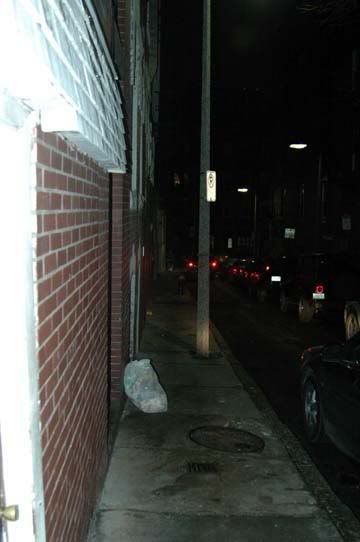
 This image was taken at 11:10am when the clouds started to ease up. The space is framed by tall apartment complexes on all sides that do not let too much sun light into the street. Once your eye travels to the top of the buildings, the image seems to stop abruptly. This could be because there is little variation in the colors; everything seems washed out and gray. Cars line the right ride of the street and don't seem to reflect much of the sun. If you look at the picture from the bottom to the top, the image is weighed down by the color of the dark concrete and asphault. The clouds make the space look dark, cold, and somewhat smaller than it is in person.
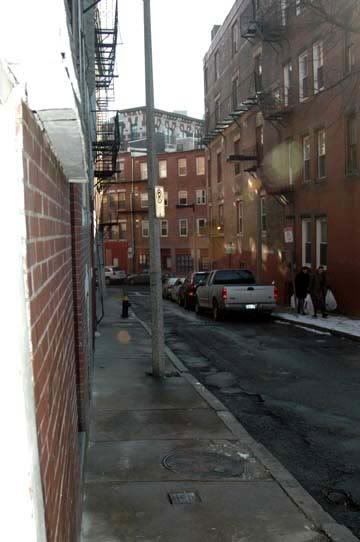 This image was taken at 2:10pm. Just above the row of parked cars, you can see the reflections of windows from the building on the left. In the area of fire escape on the left there is patch where the sun is clearly hitting, also giving the series of windows on the upper level of the building straight ahead an orange glow. The people walking next to the building on the right give the viewer an idea at how large the buildings in the space are. One can assume the buildings are fairly large because the first row of windows allign with the heads of the two people. Unlike the first picture, looking from bottom to top, the space seems to slightly taper off. This could be because the sun allows a variation in the colors of the space. The space in this picture appears to be slightly bigger, and even warmer, compared to the first image.